Saturday, April 24, 2010
VIDEO: Afghan and British army forces conduct first ever partnered engineering task
Army engineers from Close Support Kandak, 3rd Brigade, Afghan National Army and 21 Regiment, Royal Engineers, are undertaking a programme of infrastructure works at Patrol Base Rahim, in Nahr-e Saraj, as partnered engineering teams.
Filmed and edited by Captain Philip Atkinson, SCOTS


Afghan and British army forces conduct first ever partnered engineering task
 Soldiers from the Afghan and British Armies are conducting their first ever partnered engineering task.
Army engineers from Close Support Kandak, 3rd Brigade, Afghan National Army and 21 Regiment, Royal Engineers, are undertaking a programme of infrastructure works at Patrol Base Rahim, in Nahr-e Saraj, as partnered engineering teams.
Previously, Afghan Engineers were guided through their projects by soldiers of the Brigade Advisory Group. They are now working under their own commanders to complete a number of specialist engineering projects including erecting new accommodation and Patrol Base defences.
 The Patrol Base is being expanded and upgraded to accommodate approximately 300 soldiers from the Afghan National Army and the British 1 Mercian Regiment.
Lieutenant Mohammed Khalid, the Afghan Engineers’ Platoon Commander, has worked alongside British troops for four years.
He said: “When we were in Shorabak [Afghan National Army camp], the British soldiers were giving us training. But now that we are here we are implementing that training.
“Wherever people are living, accommodation is important for them, and it is the same for soldiers. We came here to make accommodation for British and ANA troops. That is why it is so important.
“We have learnt as much as we can from our mentors. If we get the type of machinery and instruments that the British troops have, then hopefully we will be able to do all of this type of work for ourselves.”
 The eleven Afghan troops are partnered with sixteen soldiers from 21 Regiment, Royal Engineers, led by Lieutenant Fran Bullock: “This is the first time ANA and UK engineers have partnered on a task like this” she said.
“Before, it was more of a mentored role through the Brigade Advisory Group. They were looking at what skills were necessary and trying to improve those skills back in camp.
“Now however, we are going out on the ground with them, working alongside them on an active site and putting all of that training into practice. This is an important step for them because it means their work has to be up to a certain standard.
“Together with the Afghans, we are constructing the ANA accommodation, the showering units and the force protection elements. We will also build a dedicated secure helicopter landing site and an entry control point, all for when the new troops arrive.
 “They have an excellent plant operator/mechanic who drives the bulldozer. He is very proficient and able to do pretty much everything we have wanted him to do. They have also been working on basic carpentry and joinery and there are so many other roles that we will develop in time. Once this project is complete, we will feed back to the Brigade Advisory Group to identify areas for further training to equip them with the skills to be entirely self-sufficient and bring them up to an even higher standard of combat engineer trades”.
 An expansion of the base will allow more troops to control the surrounding area, creating the conditions for stabilisation and reconstruction. A growing Afghan National Army presence is an important element in securing the support of the local population for the ISAF mission.
 Sgt Archie Gemmell from 21 Regiment, Royal Engineers, works as Brigade Advisory Group mentor. He has trained the Afghan engineers for their current role.
“The Afghans are in the early phase of their skills development. The engineer Brigade Advisory Group before us did a fantastic job in bringing them up to their current level. We are here now, partnering them in order to bring them on that little bit further and to identify areas of future training.
“It can be challenging sometimes, but it is extremely rewarding. There are a few characters in there, just as there are with any UK soldiers. There can be real highs and lows, as you would expect from a unit in a new role, but we all get on really well and they appreciate the advice we can give them".
 Many of the Afghans have received technical training, allowing them to use plant and machinery. Sergeant Mabeed, a bulldozer operator said: “I really wanted to be a plant operator, and now I am a plant operator and I am really enjoying my work. Everything I have learnt on this excavator has been from British troops over four years in Helmand.”
The commander of the Afghan engineers, Major Bahadar Khan, has welcomed his unit’s first active role: “The work of an engineer is so important because whenever our soldiers deploy somewhere they need accommodation, showers, toilets, and this sort of thing. If engineers are not here, who is going to build these things?
“At the moment they are getting training, but after the training, god willing, our soldiers will be able to run this sort of project themselves”.
 The joint engineering task at Rahim is the first of a number of planned partnered projects. The Afghan National Army will increasingly undertake projects of a similar scale without any assistance from ISAF and UK forces.
Picture Credit: Captain Philip Atkinson SCOTS
PICTURE of the day: Army Air Corps Lynx Mk 7 Crewman in Action

A poignant picture of a Lynx crewman

Lynx crewman scanning the ground

Fast and low approaching a forward operating base (FOB)

Air to air shot of the formation No 2 over the green zone
Pictures: Cpl Barry Lloyd, RLC, Theatre Combat Camera Team
Friday, April 23, 2010
Medics receive Afghanistan medals
 Military medics who have been serving in Afghanistan for the last six months and arrived back in the UK this week with the help of HMS Albion were presented with their campaign medals yesterday.
After arriving in Portsmouth on Wednesday night, the medics, from 63 Squadron, 253 Medical Regiment, and C Squadron, 254 Medical Regiment, both part of the Royal Army Medical Corps, made their way back to their home base of Fulwood Barracks in Preston where yesterday they were presented with their campaign medals by Brigadier Chris Parker, Commandant of the Royal Centre for Defence Medicine.

The medics had been deployed in more than 70 locations across the network of infantry patrol bases in Helmand province.
Captain Craig Fulton said:
"It's been a tough tour. But the guys have achieved a hell of a lot supporting the Battle Group, and the infantry have really appreciated what we do. It's been hard on them, but it's definitely something the guys can be proud of."
1 Mercian - Ready for Helmand Task
1 Mercian ready for Helmand task as they take over new operating base
Soldiers from Malta Company, 1st Battalion the Mercian Regiment have taken over control of Patrol Base One in Malgir, south of the town of Gereshk in Helmand Province from the 1st Battalion Coldstream Guards. The Company’s operating area for the next six months was cleared of insurgents by ISAF during operation Panchai Palang in the summer of 2009. It has since become a key focus for stability and reconstruction.

In the run up to the handover, Guardsmen from the 1st Battalion Coldstream Guards and soldiers from 3 Yorks, who have been working in the area, have been carrying out joint familiarisation patrols of the region with 1 Mercian. Each patrol aims to show the incoming unit the checkpoints and bases within the area, any projects that are ongoing and allow the new unit to start interacting with the local nationals in the surrounding villages. Of particular importance has been the handover of many of the reconstruction and military assistance projects running in the joint Afghan National Police and ISAF checkpoint along the Nahri-e-burghri canal.
Lieutenant John Sanderson, 1 Platoon Commander, Malta Company, 1 Mercian said, “The purpose of the patrol this morning was two-fold. On the one hand, it was to familiarise those of us who are taking over from the Company at Patrol Base One and secondly it was a patrol to reassure the local population and dominate the ground in order to deter insurgents from infiltrating this area.”
He continues, “The big thing for us though, is time on the ground and interacting with the local people. For me and my men, success will be based on the effect we have on the population here.”
Major Charlie Foinette, the outgoing Officer Commanding Number 4 Company, 1st Battalion Coldstream Guards explained what he was handing over: “When I’m handing over control of a patrol base like this, where we have been soldiering for six months now, the most important thing we want to get across to our successors is the population. We’ve spent six months getting to know them, and engaging with them while out on patrol and in meetings. The only important thing about this area is the population, what their fears are, what their concerns are, what their difficulties are and how we can help.”

Members of 1 Mercian will spend the next six months working in partnership with Afghan soldiers to provide continued security across the region, so projects such as the building of a medical centre and permanent school can take place. Working alongside them will be a Brigade Advisory Group from 1 Royal Ghurkha Rifles who will be training the Afghan National Army soldiers based at Patrol Base One.
Thursday, April 22, 2010
Homecoming with a difference for soldiers as UK flights resume

Troops returning from Afghanistan have arrived back in the UK following a six-month operational tour. It was a homecoming with a difference as flight restrictions meant the soldiers had to come back via the sea.
The 450 soldiers included elements from 33 Field Hospital and sections from the HERRICK 11 Battle Groups.
Sgt Adrian Wendrich, 31, a Multiple Commander with D Coy 1 R WELSH, was based in Nad e-Ali before deploying as part of Op MOSHTARAK with an ANA platoon.
“We achieved a lot working with the ANA," he said. "It was the first time we had patrolled with them like that, and it was critical we had them with us as they could integrate with the local community in a way that we couldn’t because of language barriers. So we did achieve a lot.
“The biggest threat since our last tour has been IEDs. But our Battalion found around 270 – which is a really good result in saving lives.”
Travelling home with the Infantry soldiers were 110 medics from 254 and 253 Med Regt. The medics had been deployed in more than 70 locations around the Infantry Patrol Bases.
“It’s been a tough tour,” confirmed Capt Craig Fulton, 31, RAMC. “But the guys have achieved a hell of a lot supporting the Battle Group, and the Infantry have really appreciated what we do. It’s been hard on them, but it’s definitely something the guys can be proud of."
The medics made their way back to Preston last night to join the rest of their Regiment for their medal parade through Preston this morning.
Army Website
Wednesday, April 21, 2010
Welsh snipers show courage and constraint

Members of Fire Support Company, 1st Battalion the Royal Welsh have been showing courage and constraint whilst clearing insurgents from positions near Shahzad in South West Helmand. Tasked with providing flanking protection for army bomb disposal teams, army marksmen held insurgents back from positions in a towered compound as their colleagues moved through the area. The action was part of building on the progress of Op Moshtarak.
The team had been tasked to secure a compound, but on patrolling towards the location came under heavy fire from Taliban fighters.
Sniper two “We left our patrol base just before first light towards the compound we wanted to go to and came under contact. We carried out our drills and observed, but couldn’t see anyone so pushed on and that’s when all hell broke loose. We were attacked by different weapons and people, so we moved under fire towards the compound.”
The commander in charge of the team, continues, “Straight inside, after the complete adrenaline outside, we were expecting them (the insurgents) to be in the compound, but we were confronted by four children, an elderly man and his wife. The lads switched on straight away, cleared the compound of the locals and the interpreter dealt with them. From there, I co-ordinated the two snipers up onto the roof…. As soon as they started observing, we took fire from small arms….with shots hitting the compound wall to our front.”
The snipers had to use their observation skills to clearly identify the insurgents from the locals. Using the British Army .338 L115A3 Long Range Rifle, which has state-of-the-art telescopic day and night all-weather sights, the soldiers were able to win the fire fight without injuring civilians.
Sniper one comments, “Once we got up into the tower, we identified the enemy with a weapon, and distinguished between them and civilians, who they were using as human shields at the time. We had sniper rifles, the .338, which is a precision weapon, so we were able to take clean shots without injuring any civilians.”
Sniper Two, “When I was observing, first of all I saw women and children. I was trying to find the firing points, because they had been using ‘murder holes’, holes in walls which they’ve knocked out so they can stick their rifle through. I was checking the walls for that. At the end of the wall, I saw an insurgent take a knee, raise his weapon up to his soldier and fire a burst at our compound, so I took my aim, took my time with the shot and engaged him”
Tuesday, April 20, 2010
Camp Bastion Water Bottling Plant Saving Lives
The temperatures are now creepy up massively here at Camp Bastion; it is averaging 35 degrees at the moment. It is predicted that by the height of the summer the thermometer will soar past 50 degrees. So it is recommended that soldiers drink upto 10 litres of water if they are in body armour and helmet out in those conditions.

Given there is a huge demand for water, it is fortunate that the camp can provide its own supplies. Two and a half years ago, army engineers bored down 150 metres to tap into water that naturally springs under the desert. Over 22 million litres have been extracted and yet levels are naturally renewed with water that runs off from the imposing mountains surrounding the area.
The man in charge of extracting and processing the water is Mr Colin Howell, the Camp Bastion Bottling Plant Manager.

“We have to be scrupulously clean here. If the water gets contaminated then it affects every single person in camp. Our quality control is second to none and we sample and test the water every 20 minutes”.

So hair covers, beard covers, white coats and plastic overboots are de rigeur within the plant.

Even plastic bottles are manufactured on site. So instead of having to transport water by land, Bastion’s DIY water process saves transportation tenfold and more importantly, lives.

Colin noted, “If we had transported 22 million bottles of water, we would have needed 3,500 container lorries to bring in supplies. Imagine the risks by doing that; we are very proud that we are reducing the carbon footprint and reducing the chances of people getting killed too”.

Picture credit: Corporal Lynny Cash, RAF
Story credit: Squadron Leader Dee Taylor, RAF
Monday, April 19, 2010
PICTURE of the day: RAF Chinook in Helmand Operations
 Chinook low over the desert
 Following the terrain and river in the green zone
 The Green Zone
 Landing in the rotor dust storm
 Troops being sandblasted upon landing
 Turning at low level
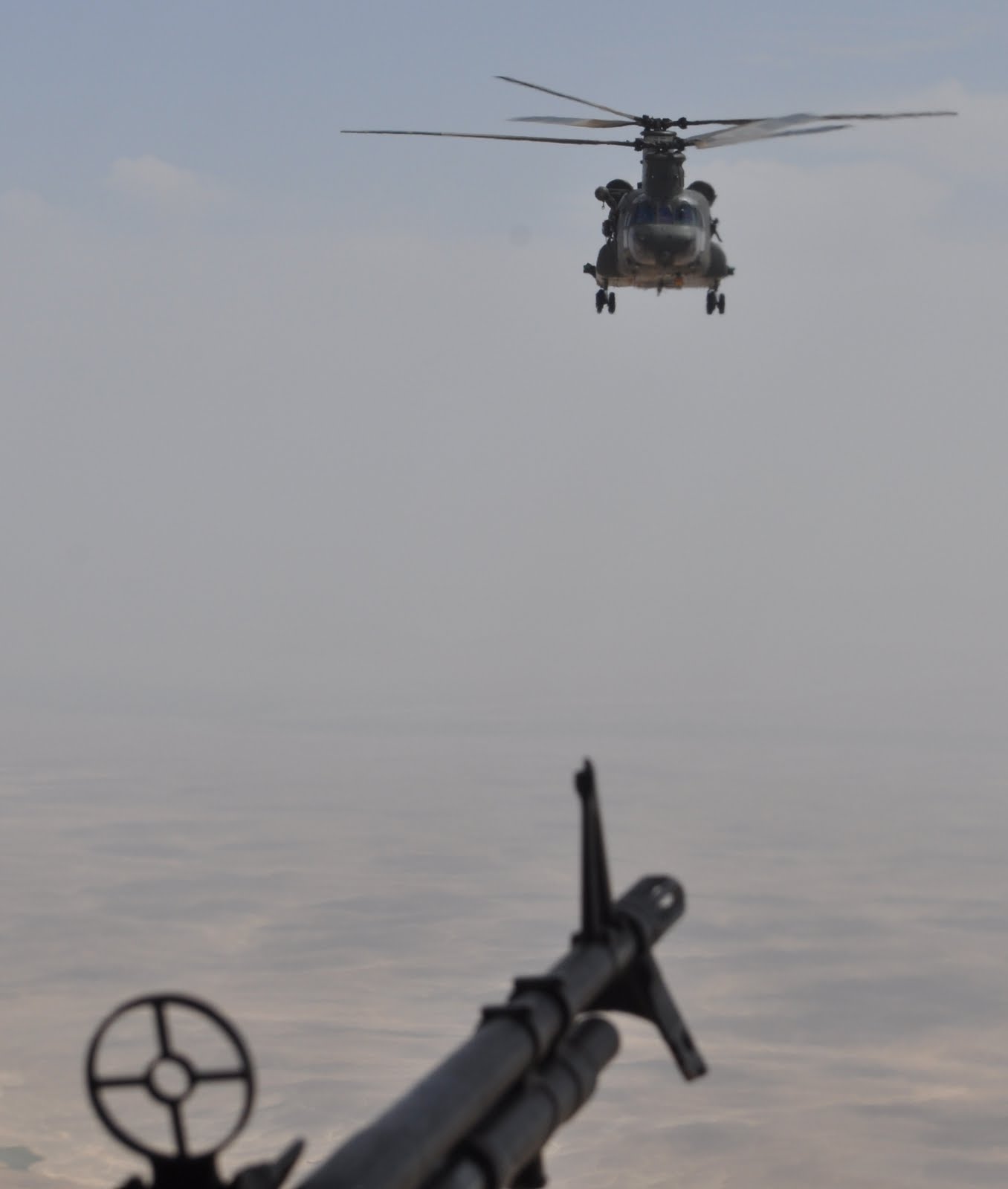 Mutual support by working as a pair
 Chinook firing flares
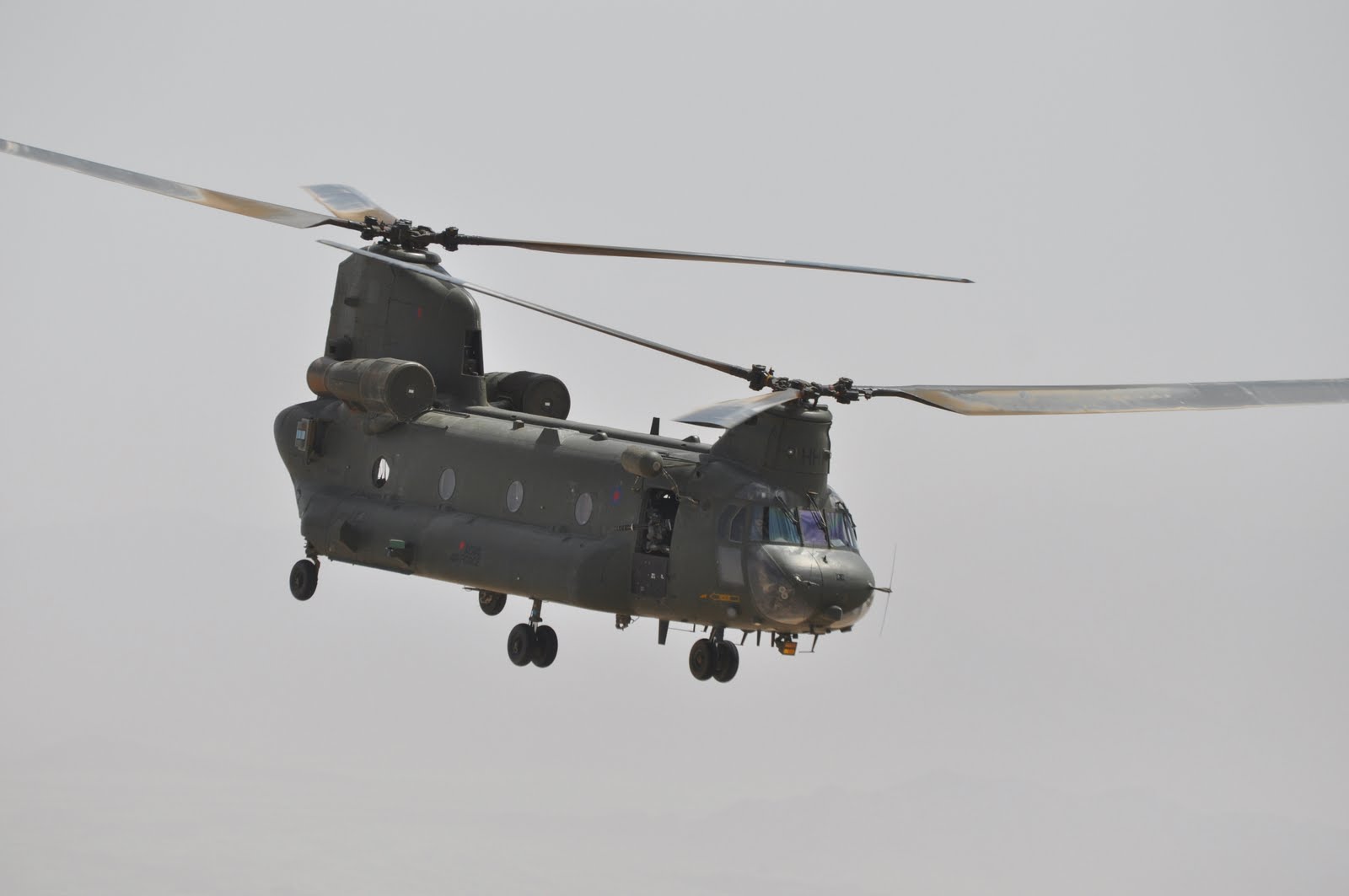 Homeward bound
 High level view from the ramp
 Almost home
Pictures: Squadron Leader Neville Clayton, RAF
Subscribe to:
Posts (Atom)


 Posts

