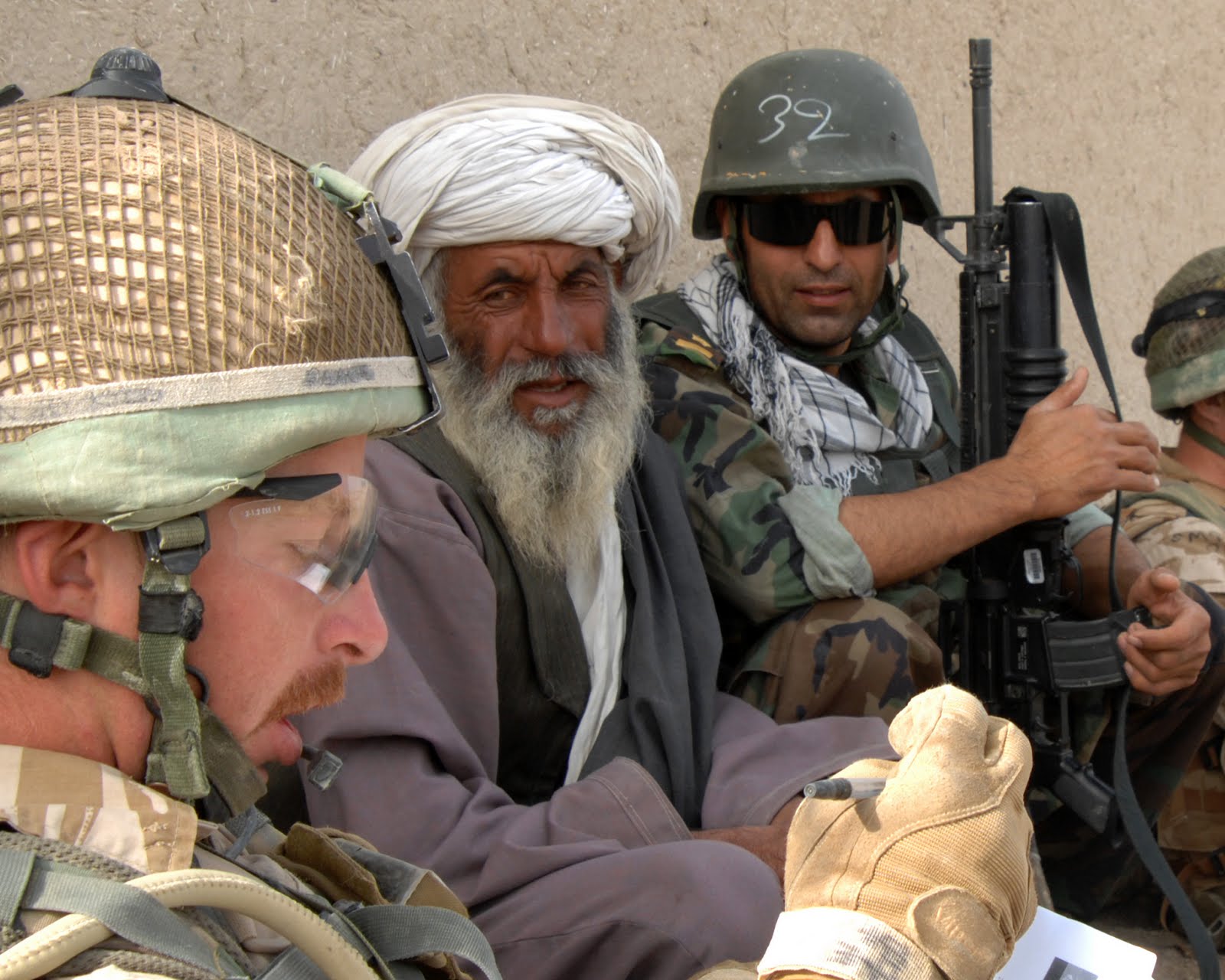
Showing posts with label anp. Show all posts

Tuesday, August 17, 2010

Fertiliser used to make roadside bombs seized in Afghanistan

Afghan police have seized enough explosive chemicals to make hundreds of homemade bombs after finding it hidden in paint and pickle boxes in the back of a lorry in southern Kandahar.

Ammonium nitrate fertilizer was banned by Hamid Karzai earlier this year at the request of Nato troops because of its use in homemade explosives.
Photo: ALAMY


The 17 tonnes of banned fertiliser, which is the main ingredient in Taliban bombs, was being smuggled in 10lb boxes in a lorry from Quetta in Pakistan according to officers.
Gen Mohammad Shafiq Fazli said the lorry had been tracked before being seized south of the city. Four people were arrested including two Pakistan nationals he said.

Hidden homemade bombs targeting patrols and convoys account for nearly two thirds of Nato casualties and also indiscriminately kill hundreds of Afghans.
The bombs hidden in tracks and walls which maim and kill British soldiers in Helmand often contain less than 50lbs of explosive, meaning the haul could have made hundreds of devices.

To read the full article click here

Add to FaceBook

Saturday, August 14, 2010

Operation Omid Sey – clearing the road to Gereshk

Following the success of Operation Tor Shezada in southern Nad-e Ali, where ISAF forces cleared numerous IEDs from key routes and installed new checkpoints, the Afghan National Security Forces have led an almost identical operation in central Helmand Province.

The Afghan National Army and Afghan National Police, working together on a major operation for the first time ever, at one point found IEDs at the rate of one an hour in Helmand’s second largest town, Gereskh.

ANA and ANP plan together for Op Omid Sey

The aim of the operation was also to drive insurgents out of the densely populated area with the support of ISAF troops and to build two new permanent police checkpoints to enhance security for local people.

Afghan counter-IED teams were brought from as far afield as Sangin and Nad-e Ali to search for roadside bombs which have been threatening the lives of civilians, soldiers and police alike in Helmand’s second largest town, Gereskh. One day they found eight in eight hours. The next day they found seventeen between dawn and dusk.

Most had been laid on a road alongside the canal, leading to an existing police checkpoint which had been attacked repeatedly in recent months. The road was also the direct route to market for the locals.

They hadn’t used it for months but were keen to see it reopened.

One Gereskh resident, Ali Mohammed, said: “The road is completely blocked by IEDs and we have to carry goods to market through the fields. I now have a really bad back as a result. We can’t wait to be able to use it again.”

ANP officer searches for roadside bombs as his commander watches on, with the support of ISAF troops

ISAF troops have attempted to use it but at their peril.

Warrant Officer John Waring, of 1 Mercian Regiment, said: “My vehicle had an IED strike here. A sizeable device, buried underneath the road. This device was believed to be a remote controlled device specifically designed to disable or destroy vehicles.”

The ANA Brigade Commander for 3/215 Brigade, Colonel Sheerin Shah, said: “Our mission is to open this route, clear all the IEDs and help keep it secure so that local people can use it.” But this was the first time the ANA and ANP had collaborated on an operation of this size. Both the ANP and ANA provided counter-IED search teams, trained by ISAF forces, and committed men and resources to protecting the counter-IED mission and the building of the two new checkpoints along the canal.

The ANA built them for the ANP, with British Army Engineers offering advice and support.

ANA Lieutenant Colonel Jangbaz said: “The ANA has equipment and this is the reason that we are building checkpoints for the ANP with the support of ISAF forces, for the local nationals.

Lieutenant Colonel Charlie Herbert, the Commanding Officer of the First Battalion, the Royal Regiment of Scotland (1 Scots), who also heads the Task Force Helmand Brigade Advisory Group, said the operation had been a huge success.

“The ANA and ANP proved they can do anything that ISAF can do,” he said. “The numbers say it all. They had 600 troops on the ground and we had just 100 offering support and advice. They seized the task with both hands and fulfilled it well. It is a great model for the future.”

Photos: Sarah Yuen/MOD 2010

Add to FaceBook

Saturday, August 7, 2010

Afghanistan Graduates Another Class Of Policewomen

Officials in Kabul have announced the graduation of more policewomen as Afghanistan bids to increase the female presence in its security forces, RFE/RL’s Radio Free Afghanistan reports.

The class of 16 women received their certificates in a ceremony in Kabul on August 5 after eight months of training at the national police academy. They will soon be assigned to different parts of the country according to the needs of various districts.

Police academy General Director Sayed Mohammed Qudusi told reporters at the ceremony that Afghanistan’s Interior Ministry is doing all it can to make the newly established education and police training system for women effective.

The academy is funded by the U.S. government.

Afghanistan is encouraging a larger presence of policewomen as part of its effort to drastically increase its overall police force.

Cadets at the academy were taught how to conduct house searches, methods of recognition, explosives neutralization and dismantling, use of firearms and making arrests, as well as techniques used in detecting the smuggling of drugs.

“Our aim is to bring and restore social order [to Afghanistan],” Qudusi said. “We have to organize our programs and bring the quality of education to a level that is in accordance with the needs of society. We have to realize these needs on the ground and act accordingly.”

Qudusi said the academy’s goal is to have trained 5,000 female police officers by 2015. He said that so far a few hundred female cadets have graduated.

Policewomen serve several important functions in Afghanistan. For example, they are more adept at dealing with female criminals or in frisking women. Many say their existence in a strict Islamic society like the one in Afghanistan can help counter negative female stereotypes.

To read the full story click here

Add to FaceBookAdd to Twitter


Wednesday, June 30, 2010

Checkpoint named after Military Policeman who died protecting local police

The British Army and the Afghan National Police have renamed a patrol base in Helmand Province after a military policeman who died protecting the Afghans he was mentoring there.


33 year-old Sergeant Robert ‘LD’ Loughran-Dickson from Kent who was based in Aldershot, Hampshire, died last November while patrolling with the Afghan National Police near the capital of Helmand Province, Lashkar Gah. He was killed in an exchange of fire by insurgents.

Now his Royal Military Police colleagues, who have followed in his footsteps and are advising the Afghan National Police in Helmand, have put up a plaque to commemorate his sacrifice, and renamed the compound where he was working in the Bolan District as Check Point L-D.

“He was embedded with the infantry and he set off from here with members of the Afghan National Police on a patrol on the day that he died,” said Staff Sergeant Holly Turner, who worked with Sergeant Loughran -Dickson when she was also based in Aldershot, with 160 Provost Company.

“He was a great guy. There are many words which could be used to describe him, but none of them would be enough. He was caring, generous, thoughtful, and a great Dad.”

Members of the RMP gathered for the memorial ceremony, standing alongside the local Chief of Police, Colonel Hakim Khan, and his men.

A letter from Sergeant Loughran -Dickson’s family was read aloud and described him as a ‘true hero’ that the whole family was extremely proud of.

“You never forget people. Their memory is always with you,” said Staff Sergeant Turner. “But all our troops who come through Check Point L-D, for as long as we remain in Afghanistan, will see that plaque and Rob will be a part of all their lives. That is fantastic and I think it will delight his family.”


Colonel Hakim Khan, the Chief of Police whose Afghan Policemen were mentored by Sergeant Loughran -Dickson said: “We will always call this Check Point L-D after him. We are never happy when one of our mentors is injured or killed. We learn so much from them and we want every one of them to go back to their country safe and well. But Sergeant L-D’s memory will stay here, with us.”

Images: Sgt Karl Whitelaw

Wednesday, June 16, 2010

New Afghan National Police Training Centre opens in Sangin

Training of the Afghan National Police in Sangin has been given a boost with the opening of a new police training centre inside one of the British army Forward Operating Bases.


FOB Jackson in Sangin is home to the men of 40 Commando, Royal Marines at the moment and they are directly involved in training and mentoring the Afghan police officers.

They have built a new training area inside the walls, and about a dozen policemen will rotate through the foundation and advanced training courses each week. They also go out on the ground with them, patrolling in Sangin bazaar and helping to man the checkpoints in the Sangin district.

"We need more checkpoints," says Captain Dom Rogers of 40 Commando, Royal Marines. "But we can't open new checkpoints until we have more men. So we have to be patient. But in the meantime we are making sure that the officers we have are as highly trained as possible."


New police officers are arriving in Sangin every week now, fresh out of training college, at a rate of about a dozen a time. They are essential to ensuring security in Sangin.

"The more police we can get, the more that frees up the ANA [Afghan National Army] to move into the Green Zone while the ANP secures the towns and villages," said MOD police trainer, Sergeant Andy Gaunt.

All of the police checkpoints in Sangin are partnered - meaning that British and Afghans work side by side to protect the population. One new checkpoint has just been erected on the edge of the bazaar, monitoring traffic going in and out. And they are setting up a recruitment bureau in the centre of Sangin to encourage locals to become policemen.


One of the checkpoint commanders, Mohammed Khan, said: "We have a good connection with the locals and the local community, especially the people who are in the peaceful area where we have our checkpoints. We are happy with all those people and they are also happy with us. We are trying to encourage all those people who are in the enemy's area to talk to us and keep up a connection with them. But security is getting better every year."

The Chief of Police in Sangin, Lieutenant Colonel Ghulie Khan, said the improving relations between the ANP and the Afghan people was a direct result of the ISAF training and the hard work of 40 Commando, who took over the task in April from 3 Rifles Regiment.


"Now they are well trained, they can get the confidence of the locals. All the locals in Sangin are tired of the Taliban and the Taliban activities. They don't want any more damage in Sangin," said Lieutenant Colonel Khan.

The new training centre will teach the police officers drills for countering improvised explosive devices, first aid, searching techniques, patrolling drills and checkpoint drills, but also more advanced subjects such as forensics.

Saturday, June 5, 2010

Sangin is allowing progress in rest of Helmand

Report by Sharon Kean, Defence Focus.

Senior British officers who were commanding troops in Afghanistan last winter have spoken of the progress made in key areas of Helmand province despite the difficulties of tackling the insurgency in the Sangin area.

The Commanding Officers also spoke about the lack of trust of Afghan people in their local security forces, but added that significant progress was made during their six months in theatre in developing the Afghan security forces which has been helped by the opening of the new police training facility in Helmand province.

The officers were addressing the media at a briefing session in Pirbright yesterday.

Brigadier James Cowan, who led 11 Light Brigade through six tough months from October last year, spoke of a lack of trust in homegrown security forces, in particular the police. He said:

"Often captured Taliban would mention during interviews the police as a principal reason for having joined the insurgency in the first place."

Lieutenant Colonel Nick Kitson, the officer in charge of troops in the Sangin area of Helmand province, said he had heard 'anecdotal evidence of bad behaviour' among local police, adding:

"They were most often cited by people in shuras as the reason why there was a problem or why people joined the Taliban. I never personally witnessed anything I would say was bad policing but there was a body of anecdotal chat around the bazaar about how rotten these people were."

Lt Col Kitson's 1,400-strong 3rd Battalion The Rifles Battle Group spent six months in Sangin, the most 'difficult' area where British troops operate in Helmand province. The Battle Group lost 30 men and had more than 100 injured.
Soldiers from 3rd Battalion The Rifles engage with an Afghan local during a patrol in Sangin

However, Taliban propaganda may have been to blame for much of the distrust, he said:

"We've heard reports that the Taliban were wearing police uniforms and mounting checkpoints, taking people's phones and money off them. If you're a little farmer in a remote village, then if he tells you he's a policeman you're going to believe him."

Brigadier Cowan said the situation had improved over 11 Light Brigade's six-month deployment, with the police now receiving better training at the Helmand Police Training College, where between 100 and 120 recruits are graduating every six weeks:

"We began to see some very reliable, very good policemen that were not only impressing us but also impressing the local people," he said.

"It will take time to get to the levels that we want. It is our aim to get to 600 every eight weeks and we've put a lot of time and effort into making sure that the right number of instructors and infrastructure is present to make it work."

Newly-trained Afghan National Police officers at a medal-giving ceremony

Lt Col Kitson's 1,400-strong 3rd Battalion The Rifles Battle Group spent six months in Sangin, the most 'difficult' area where British troops operate in Helmand province. The Battle Group lost 30 men and had more than 100 injured.

A member of the UK Combat Camera Team shows a group of Afghan children his video camera

The Royal Marines of 40 Commando are currently operating in Sangin. Lt Col Kitson said the terrain and an 'industry of IED-laying' in Sangin were factors that made the remote area hard to operate in:

"It's in the middle of nowhere, further away from government control, meaning people were at the mercy of drugs barons," he said.

A change in military tactics had helped, he said, with the Battle Group being broken down into smaller units, allowing the British troops to live nearer the local people they were protecting:

"We needed to be in among the people, not commuting into our engagement with them," he said, "so that we didn't just disappear off and in our wake came the Taliban to cut off their ears and noses and give them a hard time for talking to us."

The new arrangement resulted in more patrol bases among the people and more patrols around local areas surrounding the district centre and bazaar. Lt Col Kitson added:

"These were a real thorn in the Taliban's side. They were permanently shooting them up. That's not much fun for the locals, but they were more grateful that the illegal checkpoints had gone on the route to and from the bazaar."

The number of patrols by the Battle Group increased from eight to ten a day to almost 50 a day. And, whereas during the previous deployment there were just 800 patrols in six months, Lt Col Kitson's men were averaging 1,000 a month with the new configuration, living and working with the local security forces, fighting what he described as 'a different kind of fight'.

Progress in Sangin was also helped by the appointment of a new District Governor, Mohammad Sherrif. The number of stalls in the bazaar doubled from 500 to 1,000, there are now nearly 50 schools, and government-run health clinics are treating more than 100 people a day. Brigadier Cowan said:

"Whilst there were casualties, there began to be a sense of the futility of the struggle among the Sangin Taliban. There was a sense towards the end of the tour that while it was hard for us it was just as hard for them. Sangin has allowed progress to take root in the rest of Helmand."

Despite the heavy casualties, Brigadier Cowan said the focus was on the local people rather than fighting, using Operation MOSHTARAK as an example of how he tried to minimise the use of force, by persuading insurgents not to fight.

He described a 'war by mobile telephone' where his commanders would work with district governors to conduct 'precision influence operations', calling them to 'convince them of the inevitability of their own defeat'.

Lieutenant Colonel Roly Walker was in charge of the Battle Group based in the Nad 'Ali area, some 70km south of Sangin.

During the six-month tour his men were involved in more than 1,300 firefights, found more than 500 IEDs (62 of which detonated, mostly on vehicles) and built 20 new checkpoints.

Fifteen soldiers died and 69 were wounded, and just under a hundred went back to the UK with non-battle injuries. He said a 'conservative' estimate of insurgents killed would be 'north of 600':

"This gives you a sense of the scale of the effort that the soldiers went through," he said. "Our job was to be with the people, if we had to fight to be with the people then so be it."

Wednesday, May 19, 2010

Leaders tackle counterinsurgency and civilian casualties

ISAF and Afghan leaders ended two days of discussions on improving counterinsurgency (COIN) operations and preventing civilian casualties by cataloguing best practices that can be shared by all units operating in Afghanistan.

Maj. Gen. Rouzi, Afghan National Police, talks to a group of more than 100 people at the first ISAF Joint Command counterinsurgency shura. General Rouzi stressed the importance of partnering to help reduce civilian casualties throughout Afghanistan. (U.S. Air Force photo by Master Sgt. Steve Horton)

More than 90 representatives from all regions of Afghanistan, the Afghan National Army, Afghan National Police participated in the COIN shura, the first of its kind hosted by the ISAF Joint Command (IJC).

“We want to ensure that we are doing everything we can to reduce civilian casualties,” said U.S. Marine Col. Bradley Weisz, deputy chief of IJC Current Operations and shura coordinator. “We need to change the mindset of our troops to the COIN approach of ‘protecting the people,’ and the best way to do that is by sharing best practices and improving overall COIN awareness.”

The four main discussion topics the participants focused on were training and education, partnering with Afghan National Security Forces, escalation of force and civilian casualties, and best practices around the Afghanistan theatre of operations.

These discussions were based, in part, on observations brought back by IJC Mobile Training Teams (MTT) that were sent to gather information on how units handle escalation of force incidents and report standard operating procedures that are being used to help reduce civilian casualties.

“We need to make good decisions to help reduce civilian casualties,” Lt. Gen. David Rodriguez, IJC commander said. “The MTTs bring back many good lessons of restraint and good decision making from our young soldiers.”

“75 percent of civilian casualties have occurred when we are not partnered, so it’s very important to work with our Afghan partners to solve this problem,” he added.

Some of the observations and recommendations from the discussions included the need to filter information and COIN awareness down to the lowest soldier level; getting real-life examples to the training centres for units to use; sending ANSF partners to help train units prior to deployments; and focusing more on non-kinetic measures instead of kinetic.

To help address these recommendations, a COIN working group was established to discuss lessons learned, best practices and initiatives. Additionally, a monthly IJC training and education plan is being established, and consequence-management drills are planned for units down to platoon levels.

“Overall, the COIN shura was a success in that it brought the people from around the [area of responsibility] who deal with these issue everyday together to talk about ideas and solutions to the problem of civilian casualties,” said Colonel Weisz. “This is an ongoing process and we have a long way to go, but this is a great start to lead us down the path to success.”

Thursday, May 13, 2010

Coldstream Guards and Afghan Security Forces patrol together in Helmand

A joint patrol involving soldiers from the 1st Battalion Coldstream Guards, from Aldershot, and Afghan Security Forces has been speaking to villagers in the region of Malgir in Helmand Province.

As ISAF forces continue to work more closely with their Afghan colleagues, the patrol represents the partnering approach to security, reconstruction and development now being adopted by General McCrystal.


Lieutenant Rob Hanking-Evans and a Afghan National Army Commander talking to a local elder about security and future projects in the region.

The patrol, as with many others, was conducted with members of both the Afghan National Police (ANP) and Afghan National Army (ANA who act as the face of the joint Afghan government and ISAF led mission in Afghanistan.

They provide the first point of contact for the local population, allowing relationships to be built with Afghan villagers and the security forces.


Guardsman Danny Newton of the 1st Battalion the Coldstream Guards having a laugh with a member of the Afghan National Police (ANP).

Although security is the main concern for many villagers, at the same time, representatives from the Military Stabilisation and Support Team (MSST) work closely with our Afghan colleagues to deliver development and reconstruction to the region.
Lieutenant Robert Hanking-Evans, from Number Three Company, the 1st Battalion Coldstream Guards said: “We interact with the ANP and the ANA very well. They’re very useful assets in terms of being able to read the local population….The ANP are local to this area. They all live about one kilometre from the location where they are based, so therefore they know if there is anyone new in the area and who shouldn’t be there.

He continues, “The Afghan National Army recruit from across the country…They have the benefit of being seen by the locals as impartial and that they can be trusted as they bear no tribal loyalties.

Picture: Corporal Barry Lloyd, RLC

Wednesday, May 5, 2010

General Petraeus visits Task Force Helmand

General David Petraeus, the Head of US Central Command, visited Helmand Province on Saturday to meet British Foreign Office and military staff in Lashkar Gah.

General Petraeus - who was accompanied by the Commander of ISAF Joint Command, Lieutenant General David Rodriguez, and the ISAF Regional Commander South, Major General Nick Carter - was met by the Commander of Task Force Helmand, Brigadier Richard Felton and the Director of the Provincial Reconstruction Team, Lindy Cameron.


General Petraeus received an update on current and future operations with key briefings given by Colonel Shirin Shah of the Afghanistan National Army (ANA), and Colonel Kamulladin of the Afghanistan National Police (ANP).

Colonel Shirin Shah outlined some of the challenges that the ANA face and highlighted the steady progress that is being made by his six kandaks (companies). Colonel Kamulladin said that recent partnership operations were continuing to improve the ANP’s capabilities.


Mentoring and provincial reconstruction are key aspects of the mission in Afghanistan and General Petraeus was able to receive updates on the progress of the largest projects throughout Helmand province.

After leaving Lashkar Gah, the General flew to Forward Operating Base Shawqat in the Nad-e Ali District where he was greeted by the Commanding Officer of the 1st Battalion Duke of Lancaster’s Regiment (1 LANCS), Lieutenant Colonel Frazer Lawrence. Lt Col Lawrence talked him through what Combined Force Nad-e Ali are doing in the District to improve security, freedom of movement and reconstruction.

General Petraeus then met with the Nad-e Ali District Governor, Habibullah Khan; the District Chief of Police, Major Sadat; and the senior ANA representative in the area, Lieutenant Colonel Zelgai, before taking a walk through the thriving bazaar in the District Centre.


The General said he recognized the great efforts being made to improve the safety and security of the population within the Task Force Helmand area of operations. The ANA and ANP, working in partnership with ISAF forces, continue to shape the Helmand area building on the successes of the initial phases of Operation Moshtarak.

Brigadier Richard Felton said: “Giving the Afghan National Security Forces (ANSF) the opportunity to brief General Petraeus really demonstrates the success of partnering. An Afghan plan supported by Task Force Helmand is the real way to deliver security to the people of the Province who we are here to protect. Saturday was a significant day and indicates the ANSF’s preparedness to lead the way in the development of Afghanistan.”

Images Credit: Sqn Ldr Neville Clayton, RAF & Cpl Lloyd, RLC

Thursday, April 8, 2010

Policing In a (Very) Hot Place

MOD police help create and build an Afghan national police force


To increase security and build up civil institutions in Afghanistan Chief Inspector Paul Jordan is leading a team of 13 Ministry of Defence police officers who are helping to create a new Afghan police force - and it's not only the weather which gets very hot on this beat!

In time and with the help of the MOD Police (MDP) the new force will be fit to provide policing and security in Afghanistan without the assistance of ISAF forces.

Chief Insp Jordan is Head of the MDP's International Policing and Secondments Office and as such is at the forefront of building an integral part of Afghanistan's future.

This is his first deployment to Afghanistan but serving overseas is nothing new for the senior police officer with 36 years experience to his name "I worked in Kosovo with the UN back in 2004 where I was the Senior Investigating Officer on the 2004 March riots," Chief Insp Jordan explained.

"It was a difficult job but it doesn't compare to what I am doing out here. The base line I am working to is much lower than it was in Kosovo.

"The majority of people that we are training out here have not had the knowledge or education to give them a good grounding in police work. My job is to help rectify the situation with the help of my police and Army colleagues."

It's a challenging prospect and Chief Inspr Jordan's team is spread between the various Forward Operating Bases (FOBs) and the Interim Helmand Police Training Centre in Lashkar Gah "I have a fantastic group of men and women working with me and I know that I can rely on their judgement," Chief Insp Jordan said.

"We are looking for those Afghan people who want to learn and want to make Afghanistan a safer place.

"One of the biggest challenges is to find the right people to be the Chief and the Deputy Chief of Police in an area. As police, we weigh people up fairly quickly and we are usually not far out.

"Even though we work through interpreters, we pick up on the subtleties of things like body language. It is this sort of detail that goes to the heart of my job out here."

The importance of the task was underlined by Inspector Steve Coppard, the MDP officer helping to mentor the chief of police in Gereshk.

Insp Coppard explained "The problem is if we don't get this right with the ANP, improve their legitimacy within the province and get the local nationals to start trusting them - stop their corruption and actually function - local nationals will turn to the Taliban for justice and that is just what the Taliban want.

Progress is being made and since being in Afghanistan, Chief Inspr Jordan has introduced district policing plans, mentoring guidelines and mentoring assessments for the MDP district Police Advisors to use with their Chiefs of Police and Deputies.

These guide lines are now also being used in other mentoring areas in Afghanistan. It is this sort of progress that Chief Inspr Jordan hopes will continue after his nine month deployment is finished:

"I don't think people know what an important job the civilians do out here," Chief Insp Jordan said.

"I am in the fortunate position in that I straddle both the military and civilian sides, so I see the contribution both elements make to stabilising and building Afghan governance."

The MDP are the UK's only completely armed civil police force and are responsible for security and policing at Ministry of Defence establishments.


In January 2008 they accepted the additional responsibility of providing tactical level support to policing operations in Helmand province, including sending personnel to the military FOBs.

Tuesday, April 6, 2010

Chocolat The Army Hero

New type of search dog finds a ‘sweet’ surprise in Helmand
or
Thirteen men and a dog called Chocolat!


The old market place was deserted. The soldiers knew that something was wrong because the local Afghan traders had abandoned it to set up another small bazaar further down the road. Last month, as part of Operation Moshtarak, a full search team was sent in to clear and make the area safe. Known only as Yellow 2 in the Nad e Ali region of Helmand it looked more like a scene from a spaghetti western, minus the tumbleweed, when the troops walked in.

Enter stage right: Chocolat, a beautiful Belgian Shepherd, and his handler Private Steve Purdy (20) from the Royal Army Veterinary Corps. Chocolat is a new type of search dog referred to as High Assurance Search (HAS) and his role is to find lethal Improvised Explosive Devices (IEDs) buried under the ground. He works exclusively with the brave specialists of the Counter IED Task Force based in Camp Bastion. At Yellow 2 he was searching through the deserted bazaar when he suddenly darted into an open shop front.

“He totally right angled, went in, and wouldn’t come back. Normally he’d never go out of my sight! That’s how sure I was. Enough for me to pull him back and say that there was something there” said Private Purdy.

The ‘something’ was a huge cache from a bomb making factory located in a row of simple, single story mud rooms. There were home made explosives, old claymore mines and all the equipment in place required to make over 10 IEDs set up as a production line. Private Purdy described the whole place as feeling ‘sinister’ in a classic understatement of the reality of the situation common to CIED operators. The team were aware that it was a key point in the area where the Afghan National Police had only recently torn down the white Taliban flag flying above the local bazaar. Throughout the morning several more equipment and IED finds were discovered in the deserted market. It had been left as a death trap for civilians and soldiers alike.

As the specialists continued moving down the row of baked mud rooms, some with corrugated iron doorways that had to be blown in, another big device was identified inside an open lean-to. As the bomb disposal expert moved forward he sensed that he was being ‘channelled’, that it was a lure or ‘come on’. He paused, assessing the situation, and then Chocolat was sent around to clear a route to the rear of the buildings. The team blew a hole through a compacted mud wall at the back and sure enough the area at the front had been arranged to try and catch out ISAF troops.

Chocolat’s reward that day was some praise from his handler and a slightly bigger dinner that night, but for him that is incentive enough to try and find as many devices as he can every time he goes out on the ground. His success at finding IEDs in the initial few weeks of Operation Moshtarak was impressive and the troops value what this new search capability provides. It is helping to save the lives of some key players in the dangerous world of CIED.

Steve Purdy is justly proud of the dog he personally trained.

“Chocolat is special, partly because he’s the first dog I’ve trained. He is very cheeky but a really good dog, really good at his job. He’s also a character. He tends to wake me up a lot in the night with his toy wanting to play, or he’ll destroy something that’s close by like my flip flops! But his most annoying trait, especially when it got very cold at the start of Moshtarak, is to try and get into my sleeping bag. He’s a big dog, so it’s just not happening! I got him his own coat to keep him warm … and out of my sleeping bag.”

Steve Purdy knew that he wanted to be a dog handler when he walked into his local Armed Forces Careers Office in Colchester 2007. He joined the Royal Army Veterinary Corps, completed his training and was posted to 101 Military Working Dogs Unit Aldershot. This is his second tour in Afghanistan. On his first tour he worked with protection dogs but when a request was put out early last year for volunteers to train the new HAS dogs Steve jumped at the chance.

Sadly the partnership will not last forever. Steve Purdy will be posted soon and knows that he will have to hand Chocolat over to another handler. It is emotional for him but he is also pragmatic about life as a military dog handler.

“We work in a high risk environment. Chocolat was my dog right from the start. He literally didn’t know how to sit when I got him. Unfortunately I’ll have to hand him over to somebody else. I’m not looking forward to it but its part of the job. I know how good he is and he will be just as good for somebody else as he has been for me.”

Sunday, April 4, 2010

Murder at Blue 25: British soldier speaks of betrayal in Afghanistan

A British soldier has spoken about how he survived a betrayal by an Afghan policeman who ran amok and killed five of his colleagues.

By Sean Rayment, Defence Correspondent in Nad e'Ali, Daily Telegraph

In November last year, a small squad of British troops was sent to an isolated base to mentor members of the Afghan National Police in central Helmand.

In just two weeks the soldiers turned a ragbag bunch or ill-disciplined police officers into something akin to a professional unit.


L Sgt Peter Baily

Then, without warning, an Afghan policeman ran amok, killing five British soldiers. Lance Sergeant Peter Baily, who survived unscathed, retells the horror of the attack.

It was a typical balmy late Autumn afternoon in the British base known as "Blue 25".

Soldiers from the 1st battalion Grenadier Guards were relaxing after lunch within the secure high-walled compound they shared with members of the Afghan National Police (ANP) on the outskirts of the Helmand hamlet of Shin Kulay.

The banter among the soldiers was of friends, family and the current movements in the Premiership football table.

Sitting on the compound roof monitoring the radio was Lance Sergeant Peter Baily, 31, who had just finished sharing a Women's Institute "welfare box" of food with two members of the Royal Military Police attached to his unit

"I remember it being a beautiful day", recalled LSgt Baily. "I was on the roof because one of my radio antennae had broken and it was the only way I could get a signal.

"We had just finished lunch, and most of the soldiers were sitting on a small wall in the courtyard."

It was then that a lone gunman, who until that moment the troops had regarded as a friend and comrade, stepped out of the shadows and opened fire. The soldiers never stood a chance.

None was wearing body armour and their weapons were out of reach.

The policeman, known as Gulbuddin, fired burst after burst from his Ak47 assault rifle until his 30-round magazine was spent.

The first to die on that sunny afternoon of 3rd November 2009, was Darren "Daz" Chant, 40, the Grenadier Guards' Regimental Sergeant Major, who took the full force of the first volley fired at point blank range.

Sergeant Matthew Telford, 37, Guardsman Jimmy Major, 18, and Royal Military Police Corporals, Steven Boote, 22 and Nicholas Webster-Smith, 24, were also killed in the attack. Before the gunmen fled, 10 of the 16 British soldiers within the base were dead or injured.

LSgt Baily, a father of two, continued: "When I heard the first burst of fire, I thought: "that's close, that's really close. My first thought was that we were under Taliban attack I grabbed the radio's handset and sent the message "contact – wait out".

"The firing continued and it was then that I thought 'the Taliban were inside the compound'. That was when the screaming started.

"At first I thought it was just people shouting orders in the panic of the attack – then I realised it was people screaming in pain. It was terrible.

"I'd left my body armour and weapon downstairs in the operations room – so I ran into the Sangar [a fortified position] where a soldier was manning the general purpose machine gun so I grabbed his rifle. It was utter confusion."

Gulbuddin moved from the courtyard and continued his murderous attack within the compound's building where some of the soldiers were resting.

Firing from the hip, he wounded a further four soldiers, one of whom was shot six times, another two were shot in the hands while another was shot twice in the leg.

LSgt Baily continued: "After the firing stopped one of the guardsmen came running up the stairs and said "one of the ANP has gone mad". We needed medics, people, had been hit and I got on the radios and called for help.

"The sergeant major and Sgt Telford were killed instantly, they took the full brunt of the first burst, Gdsmn James Major hung on for a little while longer, before he died.

"Cpl Steven Boote, who was one of the RMPs, was also dead and Cpl Nicholas Webster-Smith made it on to the helicopter but died before he got to Camp Bastion.

"All the dead were in a line – it was a shocking site. It was like a scene from a murder movie – there was blood and kit everywhere. LCpl Liam Culverhouse had been shots six times and was in a very bad way, but he survived.

"The radio was like a lifeline for me – I was very scared, I was shaking, but I just kept passing the information.

"I had to tell them that the sergeant major was dead and I remember having to say "Mongoose Nine-Nine Charlie is down" that told the operations room that Daz Chant was dead.

"There was an operator on the other end who was being very calm. I got back a "Roger", every time I passed details of the dead over."

LSgt Baily continued: "After the attack, and it only lasted maybe 30 seconds, there was absolute chaos. It was almost like a training exercise where all these different things go wrong – which you think in reality never would.

"I thought if we are going to get attacked by the Taliban from the outside it will come now, so my aim was to fortify the top of the roof, get the guys in positions and wait for the cavalry to arrive.

"We got the injured up with us. We had to leave the dead where they were – there was nothing we could do for them."

The Quick Reaction Force, located at Forward Operating Base Shawqat less than two km from Blue 25, arrived within 15 minutes.

The medics set about prioritising the wounded while other troops secured the helicopter landing sites for the medical evacuation.

The most seriously wounded were flown out first and the walking wounded were taken back to FOB Shawqat. The last to be removed were the five dead.

After the chaos subsided, LSgt Baily went into a room where some of those who were unhurt were sitting in silence, smoking cigarettes.

He continued: "The guys were very quiet, clearly traumatised. I looked at one of the guys and he looked at me – I said 'are you alright' and he broke down I went over to him and gave him a hug.

"Then I looked over at the interpreter and he started crying so I gave him a hug, too. I thought to myself, 'I can't cry now, I've got to keep it together for these guys'.

"I have had a couple of times where I have felt very upset – but I've got a grip of myself and said 'no – not yet'. That night when I went to bed – I laid down, closed my eyes and I was back on the rooftop again.

"I did get some sleep, I've had a few nights since when I couldn't sleep and I've had a chat with a few friends which has helped but I've got a job to do here."

LSgt Baily was a member of a 16 man team sent to "mentor" a squad of Afghan National Police (ANP) officers, whose relationship with the local population was becoming strained after complaints that the ANP commander was corrupt.

The soldiers who were drawn from the battalion's tactical headquarters, had been at the Afghan police base for two weeks and the relationship with the ANP had blossomed.

When the British troops first arrived, they were shocked by the laxidasical attitude of the police. The ANP have had a poor reputation for years in Helmand.

Most are corrupt, often steal from the locals, primarily because they are not paid, and many are heroin addicts. Gulbuddin, the would-be assassin was regarded as a bit of a fool, but was polite and friendly.

LSgt Baily added: "Even for the ANP, they were a pretty shoddy bunch," recalled LSgt Baily.

"We turned up and were confronted with this bullet riddled compound, the ANP were lounging around drinking tea, not all of them wore uniform, they didn't seem to have any regular patrolling programme, some slept in the compound, others in the village and they seemed to come and go as they wanted.

"But the sergeant major got among them, imposed some discipline and began to work and nurture them and they really responded.

"After a few days they were back in uniform and were patrolling with us every day. We were making real progress."

In charge of the detachment was Regimental Sergeant Major Darren Chant, a soldier whose reputation with the Brigade of Guards was already legendary.

He was a tough, uncompromising, no nonsense sergeant major, who the soldiers adored.

"He was everything you would expect from a guards sergeant major. He had a great sense of humour and as long as the job got done everything was fine," said LSgt Baily.

Second in command was Sergeant Matthew Telford, 37, who was one of LSgt Baily's closest friends. "He was a giant of a man, he was the 'daddy' around the patrol base. If you had a problem you went to him or he would come to you."

Gulbuddin, the killer, has never been caught and claims by the Taliban that he was acting on their orders remain unfounded.

But if the Taliban had hoped that Gulbuddin's actions would spark similar attacks among the ANP have failed to materialise.

After the incident, the police commanders in Nad e'Ali were sacked and following wholesale drug testing, the vast majority of the ANP rank and file were also dismissed, leaving the area with just 35 officers.

To replace the ANP, hundreds of members of the Afghan National Civil Order Police, a sort of gendarmerie, were sent into Nad e'Ali in the wake of Operation Moshtarak to help enforce law and order, while new recruits were trained.

A new police training college has since opened in Lashkar Gah, the provincial capital, which turns out keen, young recruits with a degree of training every three weeks.

There are now 550 new police recruits in the Nad e'Ali district, and while it will take time to win the respect of the British troops, the new force already has a much better rapport with the locals.

Lieutenant Colonel Roly Walker, the commanding officer of the 1st battalion Grenadier Guards, said: "The killings were a treacherous act, it was monstrous.

"This was a man the Sgt Maj had helped train and they were killed then when they were unarmed and off their guard.

"But if this was a Taliban plot to undermine the police and our relationship with them then it failed. All it achieved was a wholesale clear out of the bad police."

The physical wounds of those who were injured have healed, but it will take longer before all of those involved recover mentally.

LSgt Baily, who will be returning to Britain later this month, said: "I made a pact with myself that I would not let it affect me until I got home.

"There is a plan for all of us who were there to have a night out and hopefully that will go well. I don't know how I will handle it when I get back home.

"I do question myself sometimes and ask myself whether I could have done anything which would have saved somebody's life but it was over so quickly. There will be a memorial service when we return and that will be the time to say goodbye."

Tuesday, March 16, 2010

British forces train Afghan Police in finer points of policing

Every day the police of Musa Qal'ah lead combined patrols with British soldiers through the town's bazaar and out to the remote patrol bases manned by their colleagues in the desert and the Green Zone.

Smiling through the training - members of the Afghan National Police fine-tune some of their basic policing skills in Musa Qal'ah

The Afghan National Police (ANP) rely on their local knowledge of the area, their relationship with the community, and their keen sense to notice what is abnormal.

While British soldiers patrolling with them carry equipment to detect improvised explosive devices (IEDs), the ANP can often give an indication of potential sites so that the British troops can set to work confirming the deadly presence of an IED.

But this is not all the ANP do. Now, in an atmosphere of growing stability in Musa Qal'ah, the ANP are adopting more conventional policing skills.

Under the watchful eyes of the Royal Military Police's Corporal Natasha Richards, and Captain Damian Coxon, ten members of the ANP have begun a course to teach them the techniques of searching for evidence and preserving it to ensure prosecution.

Captain Damian Coxon and Corporal Natasha Richards discuss policing methods with members of the Afghan National Police at Musa Qal'ah Camp

The ten, selected for this training by Afghan Chief of Police Commander Koka, represent the top five per cent of the Musa Qal'ah force.

They start the day with classroom lessons followed by practical training in the dusty courtyard outside, searching a compound marked on the ground by white tape.

Captain Coxon said:

"Two months ago 142 members of the ANP here in Musa Qal'ah were sent away to do the focused district development course.

"On this course they were drugs-tested, had discipline instilled into them and were trained in infantry tactics over a six-week period.

"We've had immense success in this particular field but up until now there's been very little police-orientated training.

"So the aim of the next week's training is to take ten of them and teach them how to be policemen.

"Today they have been carrying out this training, and have covered evidence-handling and how to search a compound for evidence, what to do once they've found it and searching the people inside, and furthermore how to speak and liaise with the people in the compound to make the police seem less of a threat, but more as a group of people who are working to secure the area for the local nationals."

Commenting on the training, Nematullah, a policeman for four years, said:

"This training that has been given to us is really useful. The British Army is really helping us, trying to train us in how to behave with people and bring improvements to Musa Qal'ah."

Ziaullaq, on the force for six years and standing guard at the entrance to the courtyard, added:

"People are really happy to see us patrolling on the streets, and the other thing is that people are really likely to talk with us about the Taliban. They really want us to be here because we provide their security."

And training is the name of the game throughout the ranks of the ANP in Musa Qal'ah.

MOD Police Sergeant Chris Smith is helping train the police but has the added responsibility of mentoring Commander Koka. He said:

"Mainly we've had to mentor Commander Koka's decisions to give him options that he might not have considered himself.

"There have been several occasions where we have had to point him in the right direction and to make sure that he has maintained some transparency in his dealings with the public in order to raise the profile of the ANP and so the public can see they are being served fairly."

Pictures: SSgt Will Craig

Monday, March 8, 2010

VIDEO - Contact: fighting alongside the Afghan Army and Police


The patrol started off just like any other from Patrol Base Shaheed (2.5 Km North East of Showal) on Thursday 4 March 2010. The Afghan National Army and Afghan National Police were in the lead as they are for most of the patrols in the area. As usual they had with them a handful of British soldiers from the 1st Battalion The Royal Welsh, there to offer support if needed.

PICTURE of the day: Fighting alongside the Afghan Army and Police

Fusilier Smith heading out with the British troops to join the ANA and ANP on their patrol

The patrol started off just like any other from Patrol Base Shaheed (2.5 Km North East of Showal) on Thursday 4 March 2010. The Afghan National Army and Afghan National Police were in the lead as they are for most of the patrols in the area. As usual they had with them a handful of British soldiers from the 1st Battalion The Royal Welsh, there to offer support if needed.

Patrol Base Shaheed was set up following Operation Moshtarak which took place just over three weeks ago. It was the largest air assault in Helmand since the campaign started in 2001.

Patrolling in the green zone, the soldiers were out to dominate the ground taken during the operation which took place just three weeks ago.

An hour into the patrol the tranquility was shattered just after the Afghan Security Forces left a compound where they had been talking to village elders.

Insurgents opened up on the rear of patrol from a few hundred meters away using neighboring compounds for cover. The patrol took cover in an irrigation ditch observing the insurgents movements and returning fire.

Using the ANA and ANP to suppress the insurgents the British troops moved location to join up with the ANA and ANP commanders. While the Afghans kept the insurgents pinned down the British patrol commander Lieutenant Adam Libby called in surveillance aircraft to monitor the insurgent’s movements as well as a show of force.

Within minutes a US fast jet was flying in within a few hundred feet of the ground, dropping flares to send out a very clear message to the insurgents that the patrol on the ground had some very significant firepower to call on if needed.

The key to this firefight was to use just the right amount of force to suppress the insurgents and minimise damage to the area. All around us farmers and their families were tending to their crops and going about their day as usual.

With aircraft up in the sky monitoring the situation the patrol headed back to base knowing that the insurgents every move was being tracked.

Commenting on the way the soldiers reacted during the fight, Lieutenant Adam Libby from B Company, 1 Royal Welsh said, “My lads reacted well and got on with what they had to do. The Afghans need a bit of direction but they are brave and willing to fight and there enthusiasm goes a long way. They did well today, pushing back the insurgents and sending them a pretty clear message that they are not welcome here in Shaheed.”

The pictures below were taken on the patrol and tell the story.

Pictures: Major Paul Smyth

The British join in at the back of the patrol behind the ANA and ANP.

Shaheed children come out to watch the patrol.

Watching the patrol pass by and making the most of the shade from the afternoon sun

Steady progress on the patrol

Children stop tending to the crop to watch the patrol

Lt Adam Libby keeps an eye out for trouble.

A local farmer with feed for his animals

The ANA Commander orders the move off after after the Afghan Security Forces leave a compound where they had been talking to village elders.

Fusilier Smith waits until it is time to move off

An Afghan National Policeman looking out for insurgents as rounds come in over our heads

Under fire - Lt Adam Libby calls in surveillance aircraft as well as a 'show of force' from a low flying fast jet.

The ANA commander engaging the insurgents

A fast jet fly in low dropping flares in a 'show of force'.

Reorganising after the firefight

Heading back to the patrol base now that the insurgents are being tracked

An Apache flies overhead to monitor the situation

Job done everyone OK and heading back to base

Saturday, February 20, 2010

Afghan police deployed in Helmand warzone

BBC News

Hundreds of Afghan police officers have been deployed in areas captured by Nato forces fighting a major offensive against the Taliban, officials say.


They have been sent to the Helmand province area of Marjah, to hold ground gained in Operation Moshtarak.

The British military says Taliban resistance to the offensive has increased, as expected.

Meanwhile, the Taliban denied Nato claims that militants were using human shields, and were low on ammunition.

Taliban spokesman Qari Yusuf Ahmadi told BBC Pashto that insurgents in Marjah had been able to get ammunition from captured Nato weapons. He said the Taliban insurgents involved would not use human shields, because they were related to the local residents.

Up to 400 policemen have been dispatched to Marjah, and Nato said the officers would aim to hold key road junctions and canal crossings.

The BBC's Mike Wooldridge says the aim is also to have the local Afghan authorities lead the way in establishing schools and clinics in the area once security allows.

Nato said one service member died on Friday in a small-arms fire attack, a day after six others - including two British soldiers - were killed.

The BBC's Martin Patience in Afghanistan says US Marines and Afghan troops are facing tough resistance from Taliban fighters in Marjah.

On Friday morning, helicopters dropped about two dozen American soldiers into an area of Marjah where sniper fire was concentrated.

UK commander Maj Gen Gordon Messenger told a briefing at the Foreign Office in London: "We expected after the enemy had time to catch its breath, they would up the level of resistance, and that's happened."

More than 15,000 Afghan and Nato troops, mostly American and British, are involved in Moshtarak - "Together" in Dari - which was launched last Saturday.

Nato has said it could take up to 30 days to clear Marjah of insurgents and bombs.

More than 1,200 families have fled Marjah for the provincial capital, Lashkar Gah.

Meanwhile, Nato is still investigating an air strike which killed seven Afghan policemen in the Kunduz province on Thursday.

The officers were mistakenly hit after a joint Nato-Afghan patrol was ambushed by insurgents, officials said.

Thursday, February 4, 2010

U.S. uses new weapon for surge: a press release


In an unusual tactic, allies in Afghanistan issue statement describing attack plan in Helmand in a bid to intimidate Taliban

In a rare break from traditional military secrecy, the U.S. and its allies are announcing the precise target of their first big offensive of the Afghanistan surge in an apparent bid to intimidate the Taliban.

Coalition officers have been hinting aloud for months that they plan to send an overwhelming Afghan, British and U.S. force to clear insurgents from the town of Marjah and surrounding areas in Helmand province, and this week the allies took the unusual step of issuing a press release saying the attack was "due to commence".

Senior Afghan officials went so far as to hold a news conference Tuesday to discuss the offensive, although the allies have been careful not to publicize the specific date or details of the attack.

"If we went in there one night and all the insurgents were gone and we didn't have to fire a shot, that would be a success," a coalition spokesman, Col. Wayne Shanks, said before the announcement. "I don't think there has been a mistake in letting people know we're planning on coming in."

The risks could be substantial, however. By surrendering the element of surprise, the coalition has given its enemy time to dig entrenched fighting positions and tunnel networks. Perhaps worse for the attacking infantrymen, the insurgents have had time to booby-trap buildings and bury bombs along paths, roads and irrigated fields. Such hidden devices inflict the majority of U.S. and allied casualties.

Over the past few months, the new allied commander in southern Afghanistan, British Maj. Gen. Nick Carter, has revamped NATO's coalition strategy in a region that is home to the Pashtun tribes and opium poppy fields that form the ethnic and financial foundations of the Taliban insurgency.

With the first of 30,000 new U.S. troops already on the ground in Afghanistan, Gen. Carter's plan is to focus on two population centers—Kandahar city, in Kandahar province, and central Helmand province to the west. Combined, they are home to about two million of the estimated three million residents of southern Afghanistan.

Still, the military has taken an unusual step by broadcasting its imminent intention to assault a particular town, Marjah, and its environs. During World War II, civilians and servicemen were frequently reminded that "Loose lips sink ships" and "Enemy ears are listening." For months leading up to the D-Day landings on June 6, 1944, the Allies went to great lengths to disguise their target.

For the full report click here here for the Wall Street Journal

VIDEO: The Biggest Battle Yet in Afghanistan


U.S. troops and their Afghan and NATO allies are planning their biggest joint offensive since the start of the Afghan war.